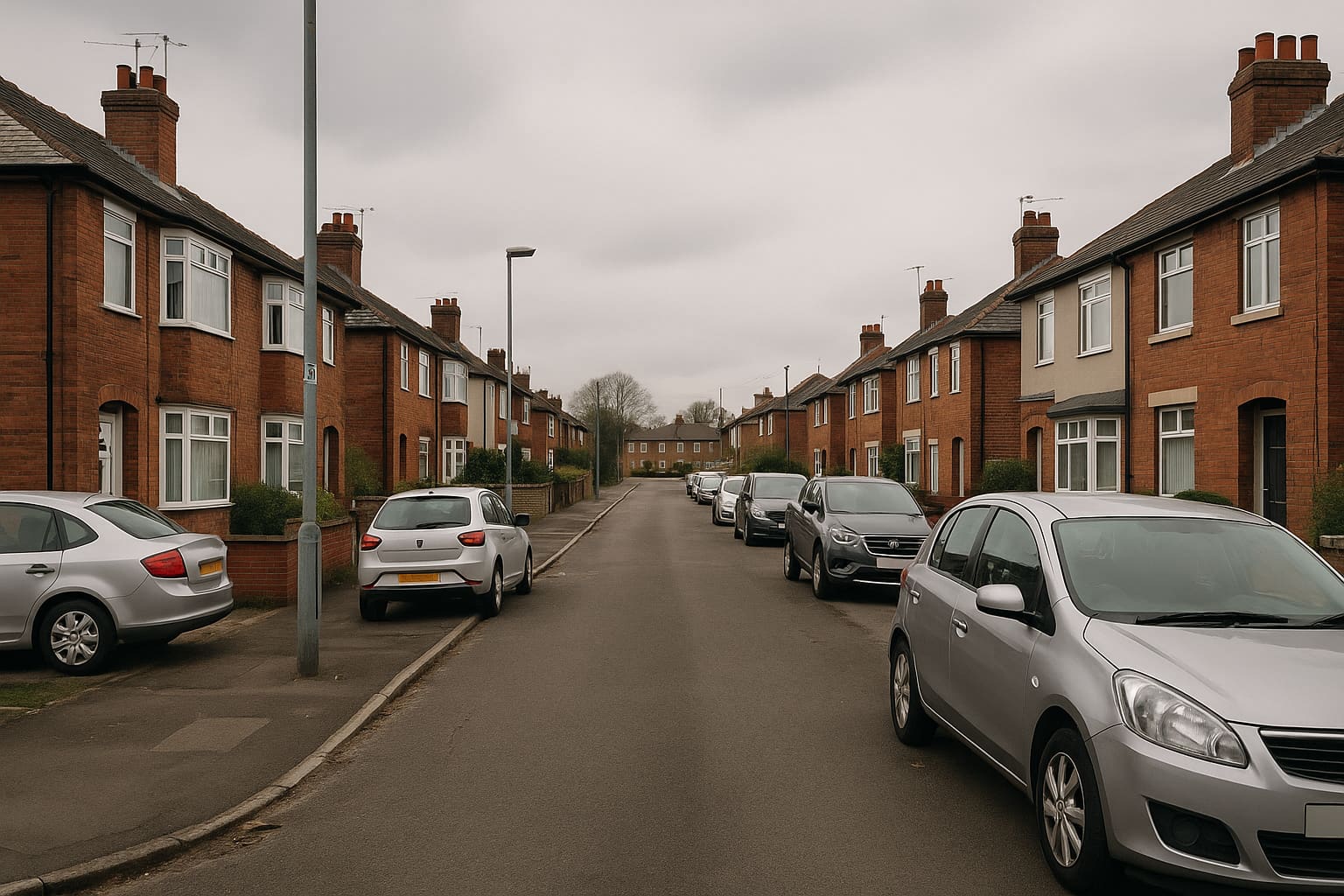
A move in Latchford often runs well or badly depending on whether the van can take a realistic loading position. The aim is not just to avoid a restriction; it is to give the crew a stopping point that keeps loading smooth and safe.
Latchford includes older terraces, semi-detached estate housing and small blocks or maisonettes on roads where frontage parking is not always straightforward. That can mean narrow hallways, rear-entry loading on some layouts, shared entrances and carries that lengthen when the van cannot take the closest position, and those details often affect loading more than people expect. A practical insight worth remembering is that a legal space is not always a useful loading space. If you are planning the day now, this is often what prevents avoidable delays later.
Use man and van in Latchford first when parking is only one part of the overall move, and keep ULEZ guide for Warrington moves in view for the broader planning picture.
It also helps to read property access challenges in Latchford with moving costs in Latchford, because access and stopping nearly always affect each other.
On many moves, the van only needs a few metres of practical space to make the job run well. Problems start when that space is blocked, badly timed or too far from the actual entrance. In Latchford, the loading route often matters more than the label on the bay.
That is especially true where managed buildings, shared driveways or tightly parked residential roads reduce working room. One coordinated booking is still the simplest route through the job, but the outcome is better when the stopping plan is clear before arrival.
A property may technically have parking nearby and still be awkward to load from. The van might need to sit on the opposite side of the road, wait for another car to move or work from a side entrance rather than the front door. Those are normal operational issues, but they should be planned rather than discovered on the day.
When parking details are only part of a wider planning picture, use the related support pages on property access and moving costs before returning to the main booking page.
This page is here to help you plan access properly, not to replace the main service page for the area.
Common questions about kerb access and loading practicality in Latchford.
Usually, yes. Even when no formal permit is needed, the important point is knowing how loading will actually work. In Latchford, that often means checking factors such as limited on-street stopping and off-street drives common on interwar estates but often single-vehicle width only before the day itself.
The move can still work, but the loading route needs to be realistic. In Latchford, where factors such as limited on-street stopping and off-street drives common on interwar estates but often single-vehicle width only apply, the extra walking distance should be understood in advance rather than discovered on the kerb.
Sometimes, but many private or managed spaces need prior approval. In apartment-heavy parts of Latchford, building access rules can matter just as much as the street outside.
Confirm the stopping point, any building permissions, any restricted times, and whether there is a backup loading option if the preferred position is blocked.
In some buildings, yes. Where factors such as short front paths, narrow hallways in older terraces slowing bulky item moves and stair access are part of the route, confirming permissions early helps avoid delays with fobs, reception desks or move-in slots.
The exact answer depends on the access route, loading position, building type and timing conditions in Latchford, but clear planning is usually the simplest way to reduce friction and avoid surprises.