
Penwortham Property Challenges – Access, Layout and Building-Type Friction

\n
\n
\n
\n

Property access challenges in Penwortham usually come down to what happens between the front room and the van. The headline address can look straightforward while the real loading route includes stairs, tight turns, longer walks or awkward stopping positions.

Penwortham property challenges are tied to the local building mix. Housing style affects how easily furniture leaves the property, how predictable access is, and whether the crew is working through clean internal routes or wrestling a sofa through awkward building layouts and tight access points.

When you need the main move page rather than property detail alone, start with man and van in Penwortham and use Preston borough comparison guide for the broader regional picture.

That matters locally because Penwortham includes a mix of semis with driveways, older terraces nearer the local centre, and apartment-style blocks where managed access or lift use can slow the hand-carry, so one move may be direct and another may depend on short-stay frontage near shops, tighter residential stopping, and longer carries from side streets or shared parking courts. On jobs like these, upper-floor moves can change the pace of the day even when the travel distance stays modest.

Quick summary

  • If you are planning a move in Penwortham, the stopping position usually matters more than the route on the sat-nav.
  • bridge approaches and school-run traffic can make a short local route feel slower than the mileage suggests
  • Clear access detail usually protects both timing and budget.

Why property access behaves differently in Penwortham

Property difficulty is rarely about one dramatic obstacle. More often it is a combination of smaller frictions such as narrow hallways, shared entrances, longer carries from a parking bay or furniture that needs careful handling through tighter spaces.

This is where support content helps: it lets you plan the practical reality without turning the page into a booking page for the whole area. If you are planning a move in Penwortham, the stopping position usually matters more than the route on the sat-nav.

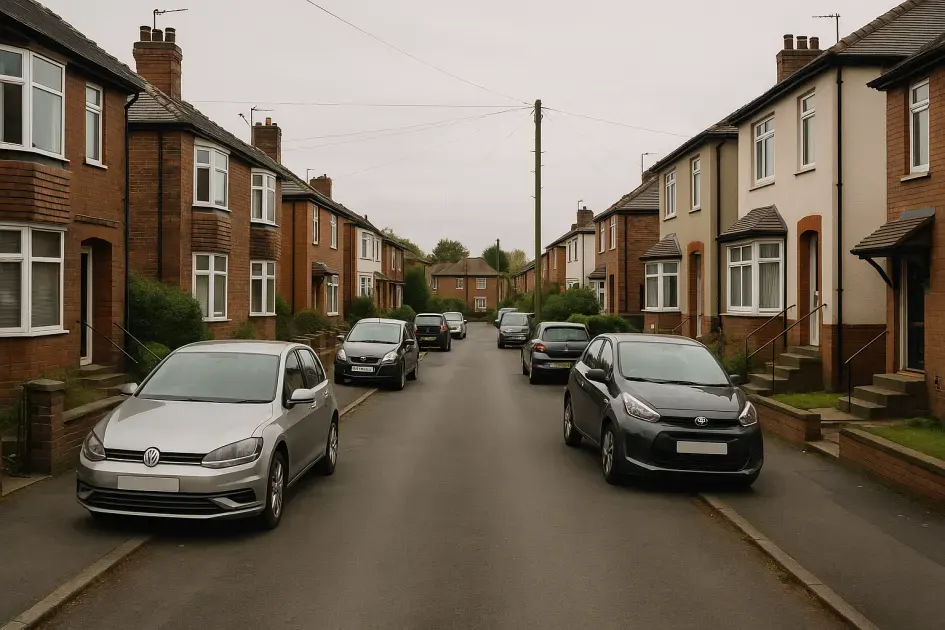
Penwortham tends to be shaped by 1930s and post-war semis with driveways and side access around Kingsfold and Higher Penwortham, Victorian and Edwardian terraces close to Penwortham Bridge and Liverpool Road with short front paths and direct pavement loading and modern apartment blocks and retirement developments near town-centre shops with controlled entrances and lift dependence. For property challenges, that matters because that local housing mix often brings permit-controlled or short-stay frontage near the district centre, often requiring loading from side streets, courtyard access, narrow approaches and variable lift access, which can turn an ordinary-looking address into a slower route with tighter corners, stair friction or awkward furniture angles.

You will often need to consider For the problems that tend to appear with awkward access, look at parking permits for moving in Penwortham and moving costs in Penwortham too. at the same time.

Local examples and planning scenarios

A compact terrace can take longer than a larger semi if the van cannot hold position close by. Likewise, a modern block with lifts can still slow the job if access is controlled or if there is a long route from the entrance to the flat.

Moves here are shaped by building reality, not just the postcode. In Penwortham, practical factors like limited on-street stopping and side-street loading and bridge, approach-road queues toward preston in the morning peak, especially around penwortham bridge, cop lane links and school arrival, pick-up traffic affecting routes around penwortham centre, higher penwortham shape how the day actually unfolds.

That matters whether you are arranging a studio move, a flat relocation or a larger household shift with vetted and approved drivers available through the platform. Clear planning protects time, and time is what usually protects the budget.

Local examples and planning scenarios

A straightforward job in Penwortham can still slow down when building access is sequential rather than parallel. One person may be waiting at an entry point while another handles the van, or the team may need to coordinate around lift use, side-street loading or a longer internal walk from courtyard to entrance. Those are ordinary local realities, not unusual complications.

To see how awkward access connects with the rest of the move, compare parking permits for moving in Penwortham and moving costs in Penwortham. When you are ready to step back from property detail to the core service page, go to man and van in Penwortham.

Practical advice before booking

  • Check the full path from the property to the likely van position.
  • Flag stairs, lifts, narrow corners and large items before the move is scheduled.
  • Mention any reception desk, coded gate or managed entrance that could slow loading.
  • Treat carry distance as part of the job, even when the move itself is very local.

Use this page as a planning layer, then move back to the main service page when you are ready to book. Support content should sharpen the practical picture, not compete with the battlefield page.


Penwortham Property Challenges FAQs

Common questions about building access and property layout in Penwortham.

Yes. In Penwortham, small access details often change the pace of the move more than people expect, especially where the route involves short-stay frontage near shops, tighter residential stopping, and longer carries from side streets or shared parking courts.

The final outcome usually changes when the real loading route is slower than it first appears. In Penwortham, that often comes back to short-stay frontage near shops, tighter residential stopping, and longer carries from side streets or shared parking courts rather than to mileage alone.

Often, yes. Many local jobs are shaped more by loading speed, stairs, carry distance and van position than by the drive itself.

Yes. If the van cannot hold a practical loading position, the crew loses time to extra walking, slower handling and repeated resets of the route.

The best approach is to share the access reality early, confirm where the van can stop and mention anything that could break the loading flow. That usually keeps the job closer to plan.

In many cases, a quieter slot helps because bridge approaches and school-run traffic can make a short local route feel slower than the mileage suggests. More predictable access often matters more than simply trying to choose the shortest route.