
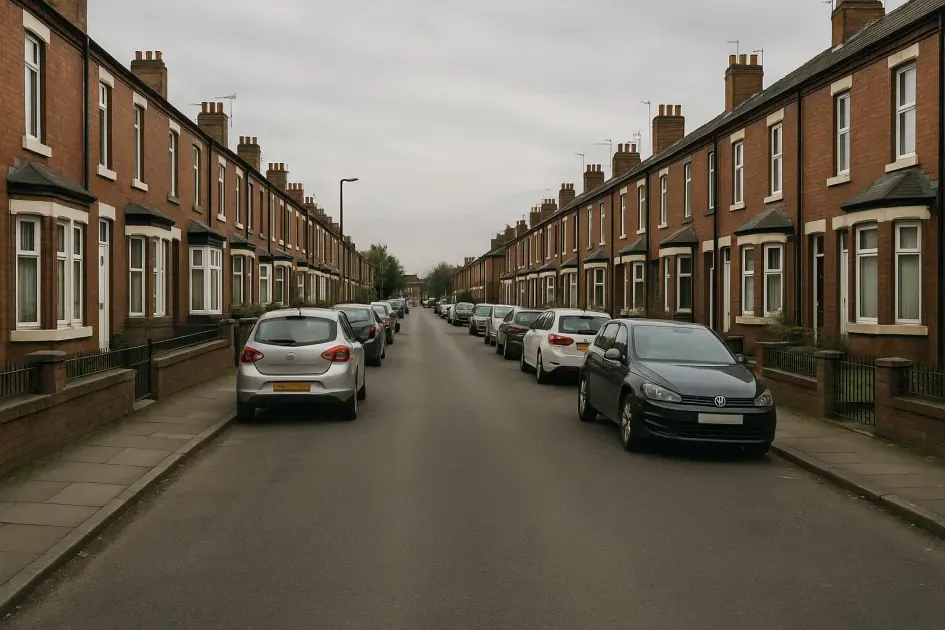
What affects cost planning for moves in Preston
Most charges rise or fall with the labour time needed to load, travel and unload. A short journey can still cost more when the van is parked further from the entrance, when furniture has to be manoeuvred through a tight stairwell, or when a flat has lift rules that slow the flow. The practical point is simple: what happens at the doorway usually matters more than the number of miles on the road.
Stairs increase cost because every trip takes longer and larger items often need slower, more careful handling. Parking restrictions add time when crews wait for a space, circle the block or work from a legal bay further away. Lift bookings, concierge checks and traffic peaks also stretch the schedule. This helps you understand where the bill usually grows: through lost minutes multiplied across dozens of trips. Scheduling pressure becomes clearer when viewed alongside Preston demand patterns at different times.
What affects cost planning for moves in Preston
| Cost driver | What changes the time | Why it affects total cost |
|---|---|---|
| Parking access | Permit zones, limited bays, long kerb-to-door carry | Increases handling time per item and may add waiting or circling for space |
| Building layout | Stairs, tight corners, narrow halls, split levels | Slows furniture turns and may require additional crew or item dismantling |
| Van size / movers | Capacity fit, number of trips, lifting capability | Right van reduces shuttling; adequate crew speeds safe handling and turnover |
| Route timing | School-run congestion, unpredictable junctions | Extends travel segments and compresses loading windows at managed sites |
Typical move price patterns in Preston
Costs scale with duration because labour time is usually the main billing unit. A compact move with close parking can fit into a short window, while a similar load with stairs, a long carry or awkward access can take most of a day. Loading time usually outweighs driving time, so two moves with similar mileage can still end up priced very differently. That pattern is also reflected in how neighbourhood layout changes moving time. A useful local example can be seen in man and van services in Bamber Bridge.
| Move type | Typical time range | What affects duration |
|---|---|---|
| Single item or small partial load | Short window | Distance to van, lift access, and doorway width for quick turns |
| Studio or 1-bed flat, straightforward access | Half-day | Lift availability, parking within sight of the entrance, minimal dismantling |
| 1–2 bed terrace with on-street parking | Over half-day | Permit rules, long carries, stairs, and tight internal routes |
| 3–4 bed home or larger apartment | Full day or staged | Item volume, dismantling/reassembly, driveway or loading bay access |
Cost examples by move type
Example 1: Small student room between nearby addresses
Ground-floor pickup to a house with driveway parking. Short carries and simple access keep the working time tight, so the cost stays relatively contained.
Example 2: Small flat with permit parking and stairs
Second-floor pickup without a lift in a permit zone. The crew must park legally and carry further, which slows each cycle and pushes the job into a longer billing window.
Example 3: One-bedroom apartment with a booked service lift
Managed building with a loading bay and timed lift slot. Efficient when the lift is ready, but any overlap or delay quickly adds waiting time.
Example 4: Three-bed semi with narrow residential access
The volume needs a larger van, but a tight street limits how close it can park. Extra shuttle distance and slower setup increase the hours required.
Example 5: City-centre apartment to terrace during school-run
Concierge checks and a loading bay at pickup, followed by tighter parking near the destination. Traffic and longer carries combine to increase labour time even though the route itself is not long.
How to keep the move efficient
- Permit or controlled parking street → Arrange a visitor permit or loading dispensation and cone/mark a space close to the entrance.
- Long internal route → Stage packed boxes at the nearest exit and keep corridors clear to reduce walking time per trip.
- Stairs without a lift → Pre-pack smaller loads, dismantle bulky furniture, and plan item order to minimise back-and-forth.
- Managed building with service lift → Pre-book the lift and loading bay, and confirm item sizes fit to prevent turn-backs.
- Narrow street access → Coordinate with neighbours for a temporary space and angle vehicles to shorten the carry safely.
- Busy traffic times → Avoid school-run or peak commuting windows to reduce travel delays and keep loading slots aligned.
- Mixed item sizes → Group boxes by room and stackable strength so crews can trolley in balanced runs.
- Special handling items → Flag pianos, appliances or large wardrobes in advance so the right equipment and crew are allocated.
Preston includes dense terraces near the centre and newer estates toward the edges, with different parking layouts and loading conditions. Access rules and street width vary by neighbourhood, so planning for local constraints reduces time on the day.