Why demand patterns matter
When bookings cluster, crews face fewer start-time options and less contingency between jobs. A delayed key handover or a long kerb-to-door carry can cascade into later arrivals, especially where town-centre one-way routes or Medway bridge crossings limit rerouting. Flexibility — such as accepting an earlier midweek start — reopens parking choices, reduces loading distance and restores buffer time to absorb minor snags without overruns.
When demand tightens, it can change timing and pricing on Maidstone moves. The local conditions behind that are explored in neighbourhood-specific moving differences. A comparable pattern can be seen in man and van services in Tonbridge. Most delays come from access constraints rather than distance once the day is tightly booked. This helps you avoid delays on the day.
Typical Maidstone demand cycle
| Timing | Operational effect |
|---|---|
| Weekends | Reduced start-time flexibility from clustered bookings; tighter loading windows near shopping areas; more route congestion around leisure traffic |
| End of Month | Tenancy changeovers compress moves into the same days; key handovers and inventory checks create fixed timelines; overruns increase because schedules are chained together |
| Summer / Student Areas | Student tenancy turnover concentrates vans near shared houses and flats; permit and driveway competition increases; stair-only blocks extend loading |
| Midweek (Non-peak) | Wider slot availability enables earlier starts; easier permit coordination; more predictable routes outside school-run peaks and weekend traffic |
Eight Maidstone timing drivers
1) How weekend bookings reduce start-time flexibility
Weekend demand concentrates crews into limited morning slots. With little buffer between jobs, any delay from parking or long carries pushes later arrivals and compresses unloading time.
2) Why end-of-month tenancy cycles cluster moves
Lease ends, key releases and check-outs align near month-end. These fixed checkpoints restrict rescheduling, so even minor traffic issues extend total job duration.
3) How student-area turnover creates seasonal spikes
Shared houses and flats near colleges turn over simultaneously in late summer. Parking on permit streets fills early, increasing carry distance and loading time per item.
4) Why school-run traffic increases scheduling risk
Morning and afternoon peaks around schools slow approach routes such as the A229 and local feeders. Slower arrivals cut into building access windows and reduce contingency.
5) How commuter traffic changes route predictability
Cross-town moves relying on the A20, A229 and Medway bridges face variable flow at peak times. Unreliable travel times make precise lift bookings and key handovers harder to hit.
6) Why building booking rules reduce available slots
Managed flats may require lift or bay reservations. When popular times fill, the remaining slots force less practical timings or longer walks from public bays, extending schedules.
7) How narrow residential streets increase timing sensitivity
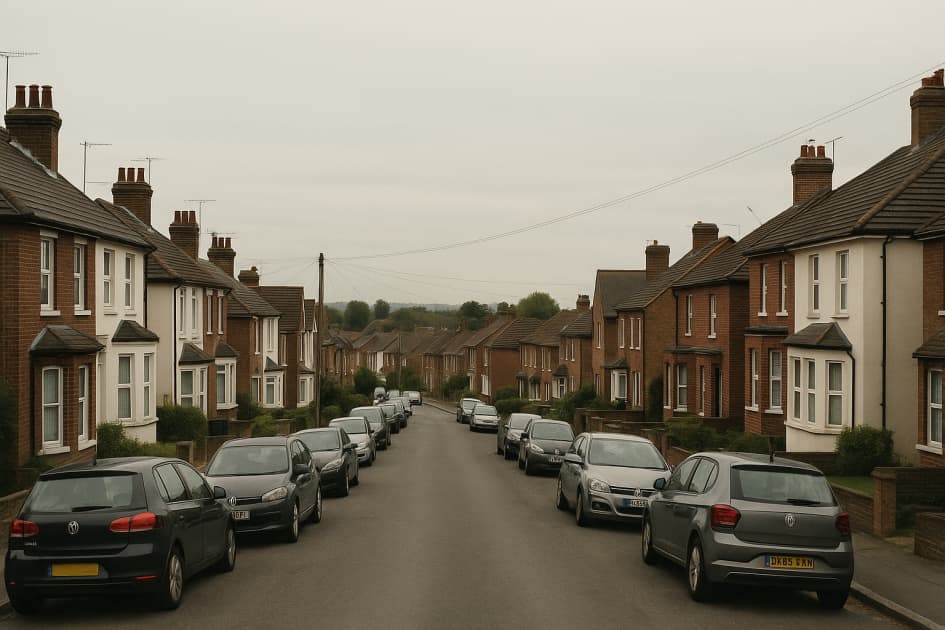
Terrace streets off main corridors can restrict van positioning. If the nearest space is unavailable, the longer kerb-to-door carry compounds with stairs and lengthens loading.
8) Why mixed-density neighbourhoods produce uneven demand
Areas blending flats, terraces and newer developments create uneven slot pressure. As larger moves coincide with multiple smaller ones, local parking turns over unpredictably and delays rise.
Scenario modelling
Scenario A: Midweek morning, detached home with driveway in a wider street. An early start avoids school-run peaks, the crew parks on-site and short carries keep loading efficient.
Scenario B: Saturday move from terrace housing on a permit street near the town centre. Space is less reliable; a longer carry from a legal bay adds time, and leisure traffic slows the route to the new address.
Scenario C: Month-end Friday flat-to-flat move during student turnover plus a lift booking. Permit-only streets, school-run congestion on approach and fixed key release compress the timeline, so even a modest delay risks missing the lift window.
Practical scheduling checklist
- Permit-only streets → Arrange a visitor permit or bay suspension and secure a near-door position where possible.
- School-run peaks → Target arrivals before the peak or well after it so route times and building access stay steadier.
- End-of-month keys → Confirm key release time and add a contingency window before the crew’s booked start.
- Managed building lifts → Pre-book the lift or loading bay and align van ETA with the reserved slot to avoid waiting penalties.
- Narrow terrace access → Use smaller vans in shuttle runs or pre-stage items near the doorway to reduce longer carries.

