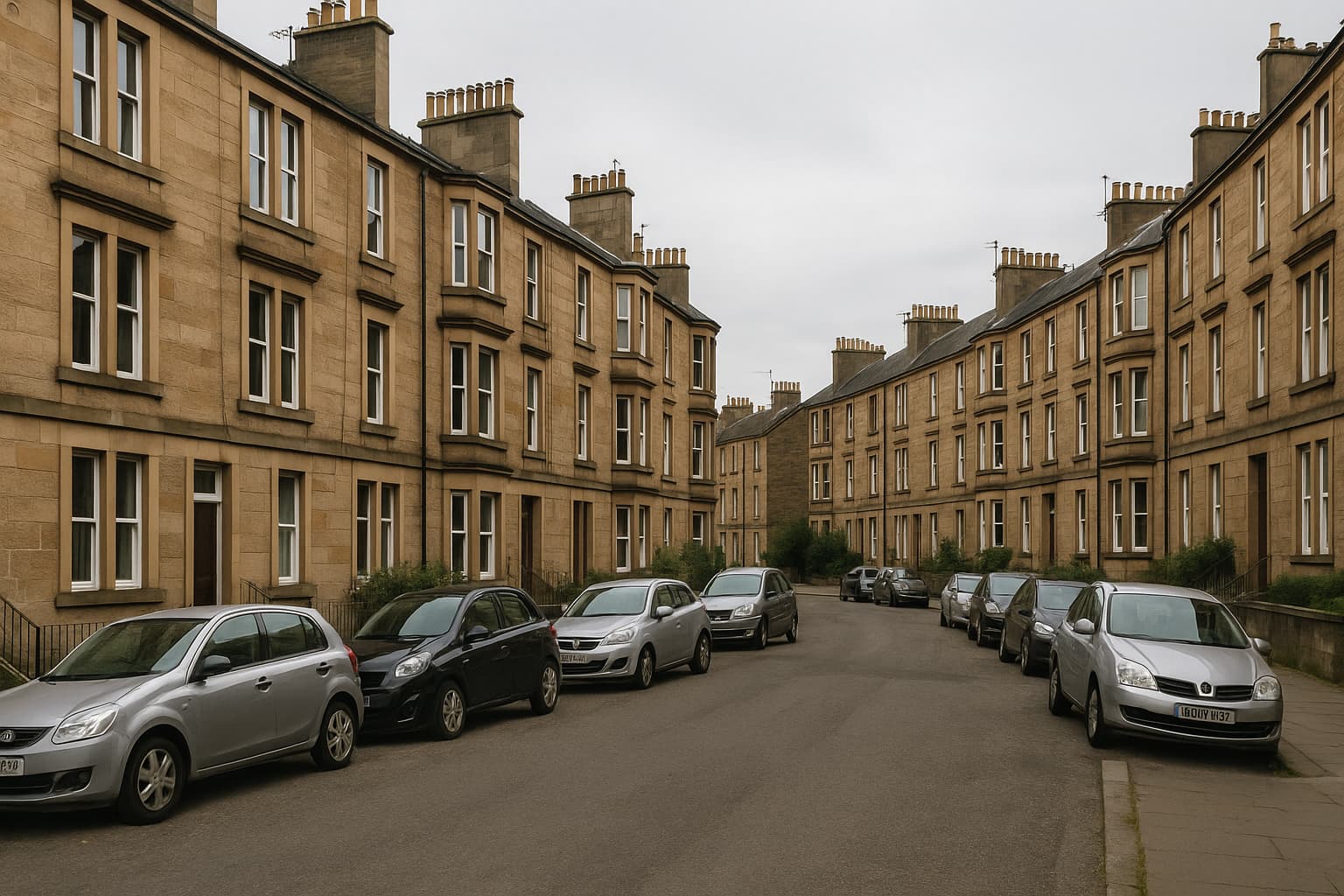
How moving conditions vary across Glasgow
Glasgow blends red-sandstone tenements, Victorian terraces, villa streets in Pollokshields, apartment clusters in Finnieston and mixed residential roads across Maryhill and Shawlands. In denser areas, kerb space is often contested and stairs are common, so loading cycles slow down quickly. Suburban edges may offer driveways or broader kerbs, which shorten the door-to-van carry and make trolley work easier. Distance between districts matters less than whether the van can hold a clear legal space near the entrance, whether there is a usable lift and how much walking is added by parking rules or narrow street layouts.
Neighbourhood access patterns
Central and West End streets tend to have controlled parking zones, bus lanes and cycle infrastructure that restrict stopping options and shorten the length of kerb a van can use safely. Tenement closes often open directly onto active streets, so the nearest legal stop may still be half a block away. In Pollokshields, villa drives can make unloading easier, but tree-lined roads and resident permits still influence where the van can wait. Maryhill’s terraces are often tighter, with parked cars on both sides, which can make a smaller van or staged loading the quicker solution. These patterns, not distance alone, shape how many efficient loading runs actually fit into the day.
Property and loading differences
Traditional tenements often lack lifts, making stair carries the main bottleneck. Some newer blocks in Finnieston or the city centre provide service lifts or loading bays, but bookings and concierge rules add fixed windows that reduce flexibility if the schedule slips. Ground-floor terraces can speed exits yet still lack nearby kerb gaps. Villas with drives allow direct loading but may involve longer internal walks from rear rooms or garden levels. Each property type changes carrying distance, vertical movement and how long the van can remain in place without breaching local controls. The pricing effect is clearer in how these conditions affect moving costs. The route-planning side is covered in Glasgow route and loading access planning. A denser neighbourhood example is man and van services in Finnieston. A more suburban pattern appears in Glasgow man and van.
How to choose the right planning approach
Anchor the plan to access rather than the map distance. Choose a van size that fits the street width and kerb gaps, schedule around lift bookings or school-run peaks, and secure visitor permits where required. For tenement moves, allow for stair carries and shorten the kerb-to-door distance by arranging the best legal space in advance. For managed buildings, confirm loading-bay rules and lift dimensions before the day itself. The right approach reduces carrying time, prevents re-parking and protects unloading windows. This helps you avoid delays on the day.
City-wide baseline: time drives outcomes
Across Glasgow’s mix of tenements, terraces, villa streets and apartment developments, loading and unloading efficiency drives outcomes. Four elements dominate: parking availability dictates kerb distance, housing density reduces stopping options, building access such as stairs or lifts controls vertical movement, and route predictability affects the approach and exit. When these align, moves feel steady. When they do not, schedules extend quickly even across short distances.
Eight variables that change moving time locally
1) How permit parking delays loading
Permit zones push vans to available legal bays rather than the ideal doorway. If a visitor permit or loading dispensation is not secured, crews walk further with each item. That increases the number of loading cycles and can force re-parking mid-move when time-limited tickets expire, fragmenting the schedule.
2) Why terrace streets limit van positioning
Narrow terraces with cars parked on both sides restrict van angles and usable door clearance. A van that cannot sit tight to the kerb leaves a longer carry and a less efficient route from doorway to tail-lift.
3) How building layout alters carrying distance
Tenement stairs, long internal corridors and split-level landings add repeat vertical and horizontal movement. Every extra turn or flight slows hand speed and increases fatigue, lengthening each loading cycle.
4) Why managed buildings introduce booking rules
Concierge-managed sites often require loading-bay reservations, service-lift slots and security sign-ins. These create fixed windows that cannot easily move if traffic or earlier loading overruns.
5) How street width affects van access
On narrow streets, door swing and tail-lift clearance are constrained. Crews may have to park slightly off-ideal positions to maintain traffic flow, lengthening carries and slowing bulky-item handling.
6) Why route predictability changes travel time
Approaches that cross bus gates, low bridges or school streets can force detours and queueing at pinch points. Predictable routes support smoother transitions from loading to travel; uncertain ones compress unloading windows on arrival.
7) How loading bay rules affect unloading speed
Retail or mixed-use blocks may share loading bays with delivery vehicles. Time caps and shared use create queueing and force staged offloads, reducing the net items-per-minute rate.
8) Why neighbourhood traffic patterns delay moves
School-run and commuter peaks reduce arrival accuracy and make kerb space scarcer. Even a short detour to a legal bay extends carry distance and splits teams between guarding the van and carrying items. Most delays come from access constraints rather than distance.
Practical planning checklist
- If permit parking restricts kerb access, request a visitor permit or loading dispensation in advance of move day.
- If tenement stairs are unavoidable, reduce box weight and stage items at the closest ground-floor point to shorten carries.
- If street width is tight, choose a van size that can park parallel with safe door clearance for loading.
- If school-run traffic affects approach routes, schedule arrival outside those windows to protect unloading time.
- If the kerb-to-door carry is long, add a platform trolley and a spotter to maintain a continuous shuttle.
Scenario examples
Example 1: Studio flat in Shawlands, small van, one mover. Quiet side street with open kerb and ground-floor access. Short carries keep loading continuous and reduce handling delays.
Example 2: One-bed tenement in Maryhill, medium van, two movers. Permit parking limits kerb space; a half-block carry adds repeated walking cycles and extends the schedule despite a short drive.
Example 3: Two-bed flat in Finnieston, medium van, two movers. Service-lift booking and corridor distance slow unloading, adding time to each stage of the move.
Example 4: Three-bed terrace in Pollokshields to West End, long wheelbase van, three movers. School-run congestion and a narrow receiving street force a secondary bay and longer carries, extending unloading.
Example 5: Four-bed move from a suburban edge to a city-centre block, Luton van, three movers. Loading is easy on a driveway, but a managed loading bay and busy kerb at destination require staged offloads, increasing total hours.
Apply neighbourhood context
Different Glasgow neighbourhoods create distinct planning conditions. Permit zones near the centre compress stopping options, terrace streets can be narrow, apartments may need lift bookings, and suburban homes might offer driveways. Parking layouts, housing density and building access rules vary across different parts of Glasgow. The guides below explain the practical moving considerations for each neighbourhood. All of these neighbourhood differences sit within the wider pattern on Glasgow man and van services.
We provide man and van services across the wider area, including man and van services in Tollcross, man and van services in Tradeston, man and van services in Anniesland, and man and van services in Bearsden, with bookings managed through one system coordinating bookings with pre-checked drivers.
