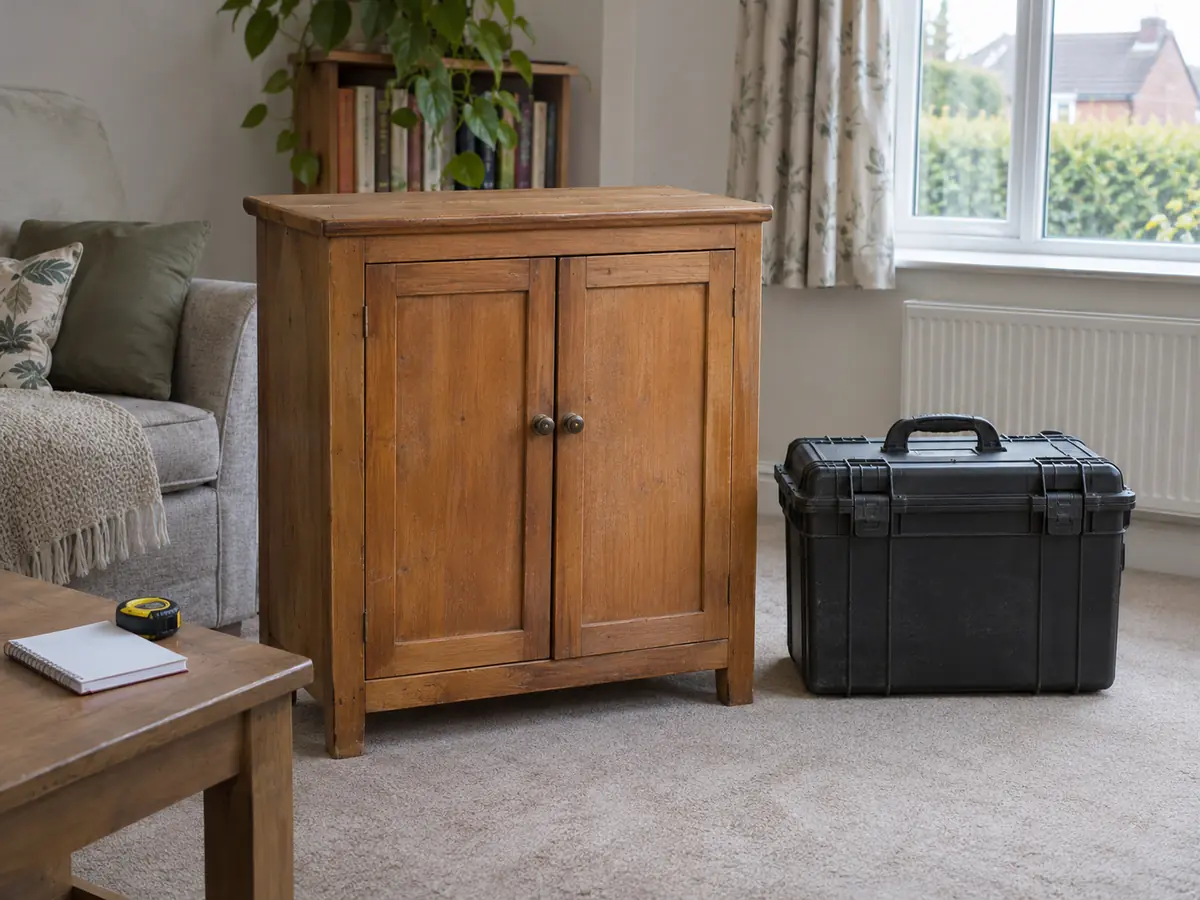
Describe an unusual item before treating it as another entry in a household load. An object can be heavy without being especially valuable, valuable without being heavy, or fragile in ways that are not obvious from its size.
The useful starting point is a clear record of the item and the job it needs. Confirm that the proposed mover can accept those requirements before making the collection date depend on an unassessed handling plan.
Explain what makes the item different
Record the maker, model or other useful identification, dimensions and a verified weight where available. State when weight is unknown rather than borrowing a figure from a similar object.
Describe fragile surfaces, removable parts, existing damage, repairs or features that affect handling. For a valuable object, record its nature and value for the booking discussion and keep relevant documents available to you.
Photographs can help show condition and access, but they are not an appraisal or proof that a particular handling method is suitable. Ask what further information or specialist assessment is needed.
Check acceptance before arranging the rest of the move
Ask the prospective mover to confirm whether the particular item, condition and access can be accepted. A general furniture service description is not confirmation that every unusually heavy, delicate or specialist object is included.
Explain any requirement for specialist packing, restricted access, unusual positioning or preparation. Where assessment or a qualified specialist is needed, arrange it before fixing a date around ordinary household transport.
For an acoustic instrument, the piano planning guide explains why the instrument and route need their own assessment. For ordinary bulky furniture, use the heavy furniture guide for the detailed inventory and access questions.
Show the entire route, including the destination
Provide the collection and delivery floors, stairs, lift limits, doorways, tight turns and the distance from a lawful loading point. Include relevant photographs or a requested access video without unnecessary personal information.
Identify where the object will go at the destination and check the route to that position. Reaching the building entrance does not prove an item can reach its intended room.
If the plan depends on external lifting, alterations, uncertain floor suitability or another unusual arrangement, obtain the appropriate specialist advice and permissions before collection. Do not improvise a solution because the vehicle has arrived.
Agree handling without inventing a safe weight rule
Weight is one part of the assessment. Shape, grip, balance, route, carrying distance and the work involved can all affect what is suitable.
The Health and Safety Executive's manual-handling guidance explains that workplace risk should be avoided, assessed and reduced, and that the law does not set a single specific weight limit. Its handling-technique guidance also makes clear that technique does not replace other risk-reduction measures.
These are workplace sources, not a household lifting qualification. The practical point is to have the job assessed rather than relying on a universal kilogram limit, a remembered lifting tip or an assumption that enough helpers can move anything.
Settle packing and preparation responsibilities
Confirm who supplies and applies the appropriate protection, who prepares removable parts and who completes any necessary dismantling. Follow the relevant maker's or specialist's instructions rather than guessing how an unfamiliar object comes apart.
Keep fixings and loose components identified with the correct item. List every separate package and explain any part you will carry yourself so the handover record remains clear.
A carton, blanket or fragile label does not establish that protection is sufficient for the object's condition and journey. If specialist crating, conservation advice or other preparation is needed, resolve it before collection. The general packing guide remains the owner for ordinary household packing.
Check cover against the actual item
Declare the nature and value of the item before booking. Ask what applicable goods-in-transit cover includes, along with limits, exclusions, excess and any packing conditions that matter to the agreed job.
FMMV's support FAQs explain that cover varies by driver and that declared item information matters. Do not assume that “insured” means every item, value and circumstance is covered in the same way.
If important questions remain unresolved, settle them before confirming transport. Keep any relevant written agreement with the booking record rather than relying on an informal assumption about a valuable piece.
Make the handover record useful
Agree how the item, its parts and visible condition will be recorded at collection and delivery. Keep the record specific enough to identify the object without sharing unrelated identity documents or account details.
Have an authorised person available at each end and use the agreed process to raise a discrepancy or concern. Do not treat a photograph or signature as a substitute for checking what is actually being handed over.
For a furniture enquiry, contact furniture movers with the item record and complete access details. Confirm acceptance and preparation before booking, and update the plan if the item, route or required work changes.

Liz
Liz is a content creator and digital marketing consultant. Originally from Toronto, Ontario, Canada, she is now happily settled in the UK (after living in four different countries across 2 continents and moving house 10 times). Drawing on her experiences, Liz shares practical advice and insider tips to help others enjoy smoother, stress-free moves.

Our Moving House Guides support homeowners and renters through every stage of relocating to a new property. At Find My Man and Van, we provide step-by-step advice on planning timelines, organising utilities, preparing furniture, and coordinating your move day efficiently. Whether you’re moving locally or further afield, these guides are created to help make your house move smoother, more organised, and less stressful.