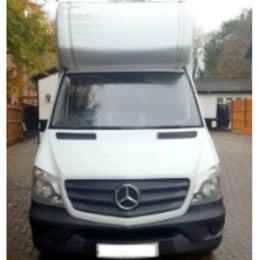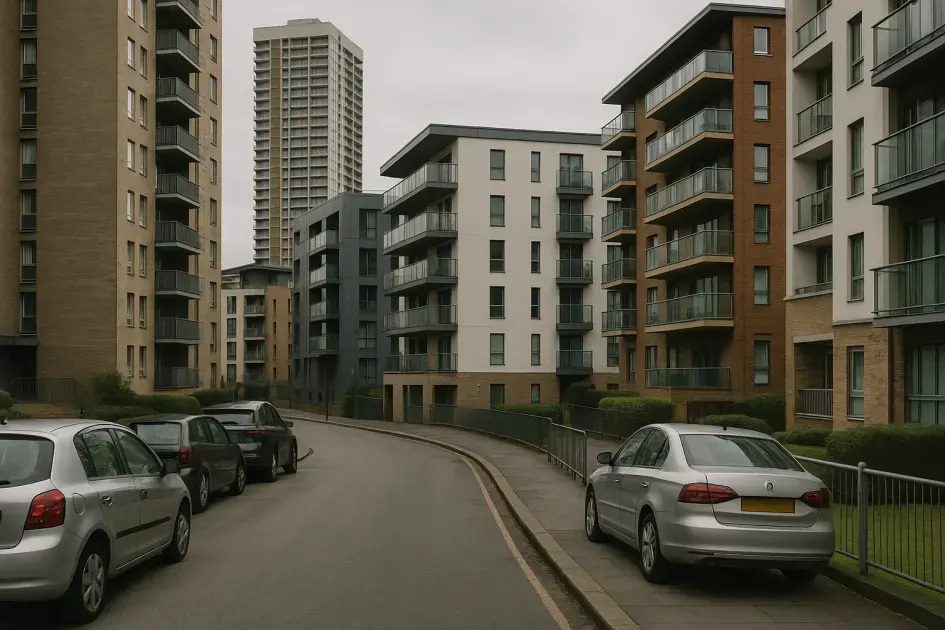
Hidden moving costs in Canary Wharf usually come from time loss, not mystery fees. Small delays stack up when the crew has to wait for access, walk longer routes or reload awkwardly because the van cannot stop where the job really begins.
Canary Wharf tends to be shaped by dockside apartment towers with managed entrances, fob access and shared lifts, modern riverside blocks with basement parking and internal loading bays and ex-local authority estates with mid-rise blocks and deck-access sections. For hidden costs, that matters because that local housing mix often brings concierge sign-in, timed loading slots, move-in booking rules in managed blocks, variable lift access, courtyard access and narrow approaches, and each extra friction point quietly leaks time through repeated waits, longer carries and awkward handling cycles.
A move here behaves differently from a generic London job for practical reasons. In Canary Wharf, practical factors like permit bays, pay-by-phone controls on surrounding residential streets, with little room for waiting and side-street loading and weekday commuter pressure and school-run traffic affects local streets around poplar, isle of dogs at morning, afternoon pick-up times shape how the day actually unfolds.
That matters whether you are arranging a studio move, a flat relocation or a larger household shift with vetted and approved drivers available through the platform. Clear planning protects time, and time is what usually protects the budget.
A straightforward job in Canary Wharf can still slow down when building access is sequential rather than parallel. One person may be waiting at an entry point while another handles the van, or the team may need to coordinate around lift use, side-street loading or a longer internal walk from courtyard to entrance. Those are ordinary local realities, not unusual complications.
That is why this page works best as part of a clear planning path. The moving guide is the main hub for this area. For one closely related angle, see Moving Costs. For a second supporting issue, review Property Challenges. For broader regional context, see the London macro guide. When you are ready to connect local planning back to the full service page, return to the Canary Wharf man and van page. For comparison with other cities, see our national moving guides.
Use this page as a planning layer, then use the Canary Wharf man and van page when you want to request the actual service. Support pages should clarify planning factors rather than duplicate the booking page. That way lies cannibalisation and other structural issues.
Common questions about the quiet delays that can stretch a move in Canary Wharf.
Yes. Lift delays can interrupt the work rhythm repeatedly, and that matters more than people expect. In apartment-led parts of Canary Wharf, they can quietly extend the total job time.
Absolutely. When the internal path is longer than expected, every trip takes more time, and moving jobs are made of many repeated trips. The arithmetic becomes rude very quickly.
The common hidden costs are usually hidden time multipliers rather than separate charges. In Canary Wharf, they often come from concierge sign-in, timed loading slots, move-in booking rules in managed blocks and variable lift access, permit bays, pay-by-phone controls on surrounding residential streets, with little room for waiting and side-street loading, and repeated carry distance.
Because the crew spends more time walking, repositioning and waiting. In Canary Wharf, where factors such as permit bays, pay-by-phone controls on surrounding residential streets, with little room for waiting and side-street loading are common, a weak stopping position becomes a tax paid in minutes.
Surface the awkward details early. The more honestly the access route, loading position and timing pressure are described, the fewer surprises show up later as overrun.
They can be. If factors such as weekday commuter pressure and school-run traffic affects local streets around poplar, isle of dogs at morning, afternoon pick-up times slow arrival, stopping or unloading, the job can drift beyond the comfortable estimate even when the inventory itself is straightforward.